ENG

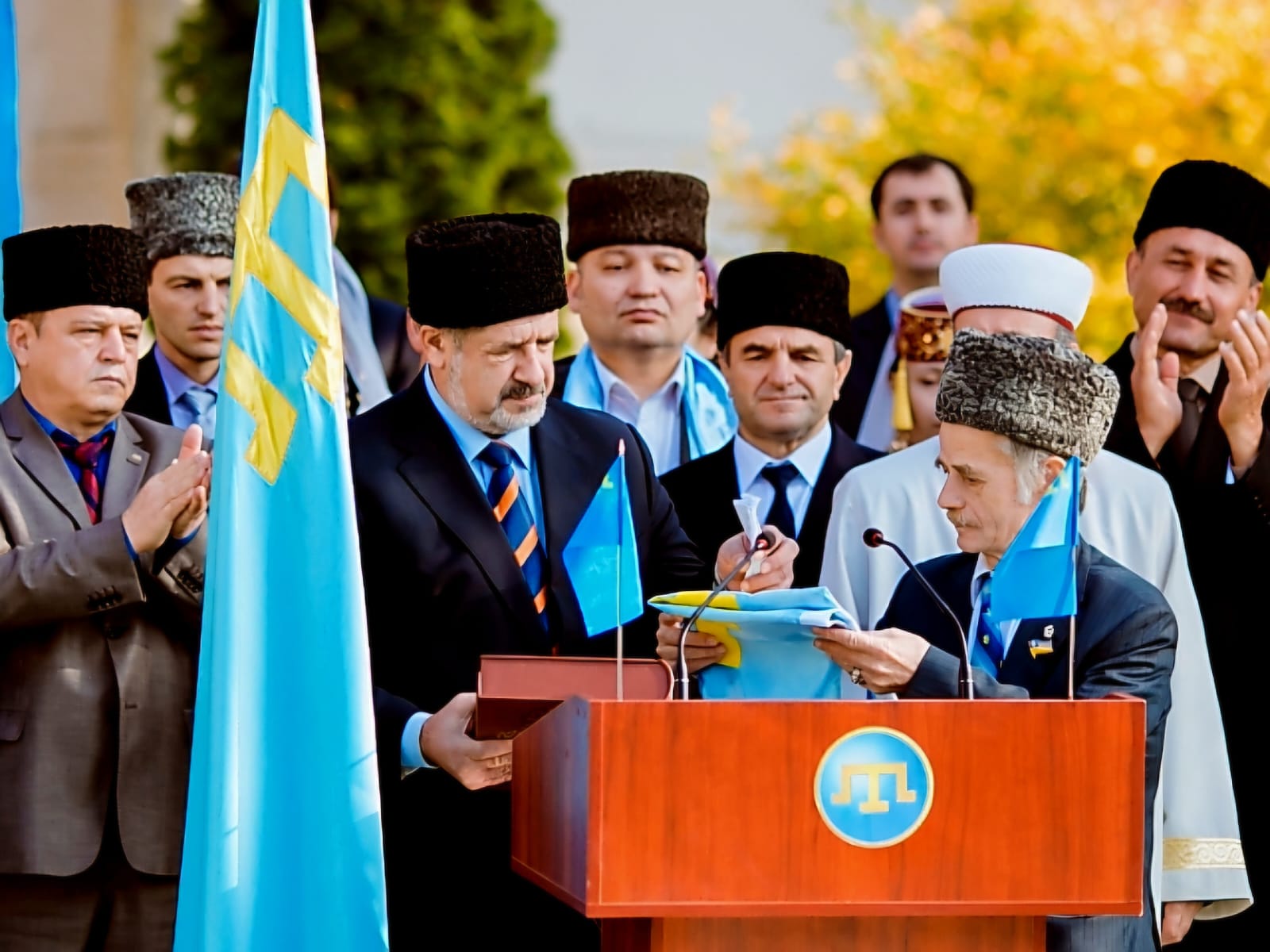
Half a year ago, the Crimean Tatar people (at least the part of them that supports the body of national self-government) celebrated the legalization of the Mejlis. But far from everyone understood what, exactly, the long-awaited presidential decree and the subsequent government resolution actually changed.
Only the social media activity of Eskender Bariyev — a member of the Mejlis and, at the same time, the head of the Crimean Tatar Resource Center — unequivocally suggests that a struggle is underway within the representative body of the indigenous people: after all, the center can now receive budgetary funding.
Chubarov and his deputies
The Mejlis consists of 33 members. They are elected by the Qurultay. The current composition was elected by the Qurultay in 2013. And no one knows the exact number of active members as of today.
Only the Qurultay can elect the Chair of the Mejlis, but deputies can be elected without it, from among the active members of the Mejlis.
Akhtem Chiygoz and Ilmi Umerov remain in these positions and live in Kyiv. Arslan (Ruslan) Umerov (the older brother of Rustem Umerov, head of the Foreign Intelligence Service) has been living in the United States for 10 years. The deputy mufti of Crimean Muslims, Ayder Accimambetov, has been removed from his position as deputy chairman, and his membership in the Mejlis has been suspended. Under the same provision, following the occupation of Crimea, the first deputy, Russian collaborator Zaur Smirnov, was removed from office and Nariman Сelâl was elected.
However, since last year, Сelâl has served as Ukraine’s Extraordinary and Plenipotentiary Ambassador to Turkey and, according to the Mejlis’s internal documents, cannot remain in the position of either first deputy or regular deputy.
The rule prohibiting the holding of concurrent offices by the Mejlis chairman and his deputies applies to any government positions, but in 2019, Akhtem Chiygoz was elected to parliament on the “European Solidarity” list, while Mejlis Chairman Refat Chubarov himself did not become a deputy solely because he was placed in the non-electable portion of Smeshko’s list.
Thus, a consensus has now been reached in the Mejlis — the ban on holding multiple offices does not apply to elected positions. Therefore, only Nariman Сelâl’s seat can be contested among candidates for the administrative post.
Eskender vs. Nariman
It’s no secret that Eskender Bariyev has long wanted the position of first deputy. As head of the Mejlis’s Department of International Relations, he worked for many years to legalize the Crimean Tatar representative body within the Ukrainian legal framework.
It was Bariyev who, in 2024, filed a lawsuit against the Cabinet of Ministers for inaction. Bariev is ready to talk for hours about all the bureaucratic procedures he had to navigate with the State Service for Ethnic Policy so that, after 35 years and six presidents, the Ukrainian state would finally legalize the indigenous people’s parliament.
Bariyev reacts sharply to reports that suggest he is offended by Chubarov’s refusal to satisfy his ambitions. He simply believes that the current active officials of the Mejlis on the Ukrainian mainland should publicly report on the work they have done, specify which of them heads which department — and then the issue of the division of powers will resolve itself.
Refat Chubarov, by all accounts, is not ready to initiate the resignation of First Deputy Nariman Сelâl. And Nariman Сelâl is not yet ready to submit his resignation on his own.
The problem could be solved by introducing a second position of first deputy, but no one knows whether the Mejlis can have two first deputies: the regulations, rules, and procedures of the Qurultay-Mejlis are still not publicly available and are known only to those who have been manually transcribing these documents for 35 years.
In subsequent articles on the legalization of the Crimean Tatars’ system of national self-government, we will attempt to reconstruct the Mejlis’s internal rules and procedures, address the formation of public and youth councils under its auspices, present various perspectives on the re-election of the national body, the division of powers between it and the World Congress of Crimean Tatars, as well as the real challenges facing (or that should face) the Mejlis amid the occupation of Crimea and the lack of prospects for its swift liberation.