ENG

Erdoğan has cracked down on the opposition so skillfully that, just two weeks ago, it seemed nothing could prevent him from ruling Turkey for life. However, events have suddenly unfolded that could irrevocably bury what remains of his political party’s approval ratings. It is simply impossible to imagine such a reason for a decline in political popularity in our region, let alone in Russia. And therein lies both Turkey’s strength and the weakness of its political leadership: the country has an open economy and is fully integrated into Western financial markets.
CEMAAT last updated readers on events in Turkey following the government’s hostile takeover of the opposition Republican People’s Party. In violation of the law on political parties, the previous leader, 77-year-old Kemal Kılıçdaroğlu, was reinstated as chairman, while the troublesome leader Özgür Özel — who had won the party’s internal elections in November 2023 — was removed. Just six months after Özgür Özel took office, Atatürk’s party crushed the ruling Justice and Development Party (Erdoğan’s party) in local elections, leaving the ruling party without control of a single major city.
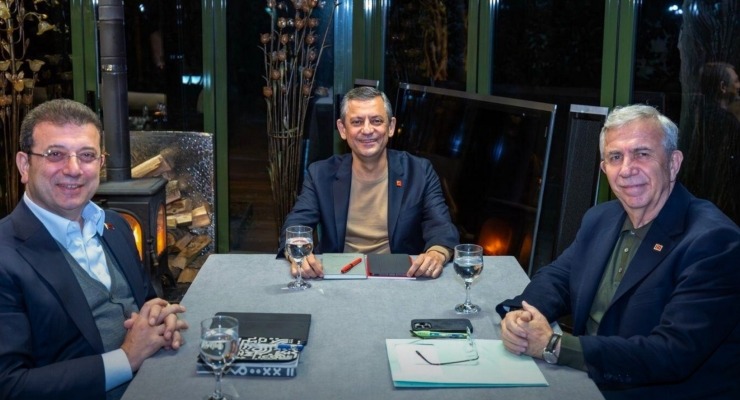
Erdoğan weathered the electoral earthquake and launched a counteroffensive on several fronts. Beginning in the fall of 2024, opposition mayors were arrested on corruption charges. The primary target was Erdoğan’s main rival, Ekrem Imamoğlu, the mayor of the country’s largest city, Istanbul. He has been in prison since March 19, 2025, and prosecutors are seeking more than 2,000 years in prison for him. Even Erdoğan’s coalition partner, Devlet Bahçeli, proposed broadcasting Imamoğlu’s trial live to dispel public doubts about the politicization of the proceedings. Erdoğan refused to agree to a public trial.
To date, the number of mayors removed from office is approaching one hundred. At the same time, the authorities installed the compliant Kemal Kılıçdaroğlu as leader of the Republican People’s Party (CHP), even though he had no support either among his party’s parliamentary faction or among voters. Supporters of the true opposition were forced to form a new party, which they named Yeni — New. However, the opposition’s fragmentation led to devastating consequences and the near-total loss of the gains made from the victory in the 2024 local elections. Along with Imamoğlu, the mayors of Antalya, Adana, and Bursa fell victim to the wave of repression.
Even before the crackdown on the opposition leadership of the Republican People’s Party (CHP), two women had switched party affiliations: Afyonkarahisar Mayor Burcu Koksal and Aydın Mayor Özlem Çerçioglu. They immediately defected from Atatűrk’s party to Erdoğan’s party. Such political opportunism usually results in the loss of one’s political career in the next election.
After Kılıçdaroğlu’s “return,” several more mayors left the party because they refused to work under his leadership. However, several prominent figures, having left Kılıçdaroğlu’s Republican People’s Party (CHP), never actually joined Özel’s New Party.
Two of them deserve special mention. Ankara Mayor Mansur Yavaş, like Imamoğlu in Istanbul, has won local elections twice. Like Imamoğlu, he first won the mayoral seat in 2019, but faced an Erdoğan-aligned majority in the city council. Both mayors managed to deliver results during their first terms, and in 2024, Yavaş not only won Ankara with a record 60% of the vote but also secured his own majority in the city council.
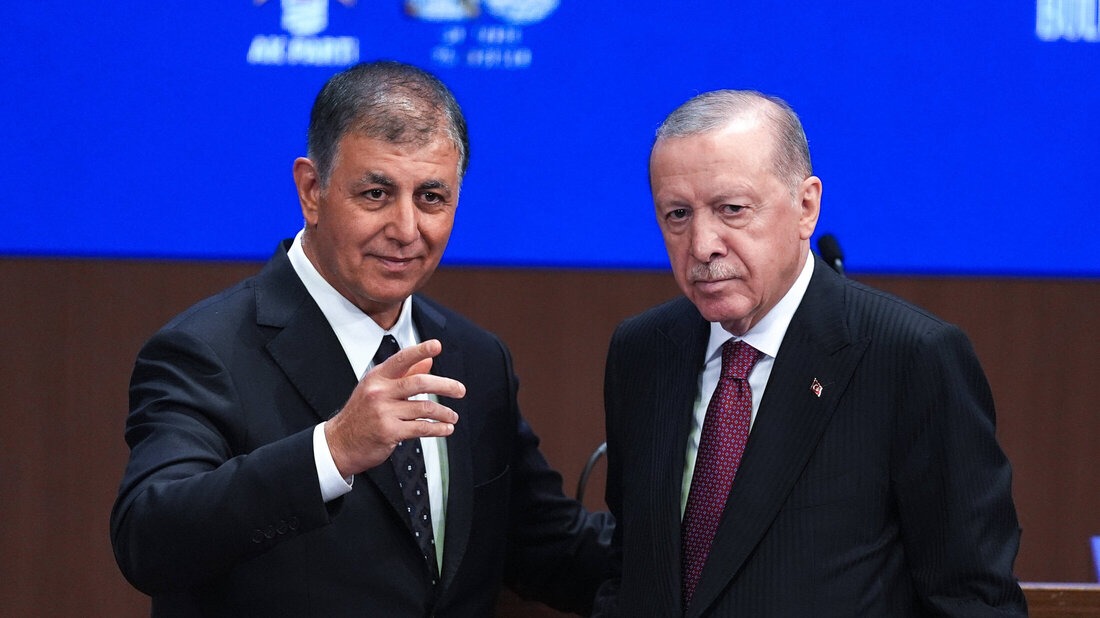
For many years, his name has been among the top three most popular politicians in the country, and simulations of a second-round election show that, until recently, he was outperforming Erdoğan with a better result than even the imprisoned Imamoğlu. Yavaş recently left the CHP in protest of Kılıçdaroğlu’s return, but decided to remain an “independent mayor.” Even more puzzling was his September meeting with President Erdoğan, which was widely reported by the media but whose details remained a mystery. Rumors circulated that Yavaş had received assurances he would not end up in prison because he was “too old for that.” At the same time, he allegedly assured the president that he would not use his popularity to bolster Özel’s New Party. Yavaş did not join the Justice and Development Party — at least not yet. But last week, the mayor of the country’s third-largest city, Izmir, Cemil Tugay, took that step, and it came as a real shock to the nation. The reason for this shock requires explanation. Izmir has never fallen into the hands of Islamists, not even moderate ones. Throughout nearly the entire history of the republic, this city has been the most freedom-loving and oppositional. It is called “gavur Izmir” — “infidel Izmir.” The nickname is almost offensive, as it implies that the city’s residents are not true Muslims — or perhaps not even Turks. Erdoğan failed to win here even in the early years of his immense popularity, when the AKP painted virtually the entire political map of the country orange (the party’s color). And now, as Islamists are losing control even in the conservative provinces of central Anatolia, the mayor of Izmir’s move to the AKP looks like, say, Zelenskyy joining “European Solidarity.”
This entire repressive campaign by the authorities has borne fruit. Since the summer, the AKP has once again led the polls at 31%, while the opposition’s share has been split between the New Party, which barely reaches 25%, and Kılıçdaroğlu, who, by court order, inherited the CHP’s “Atatürk” brand — ranging from 4% to 6%. This means the party will not cross the 7% threshold in the election but will siphon off enough opposition votes for Erdoğan’s AKP to secure first place.
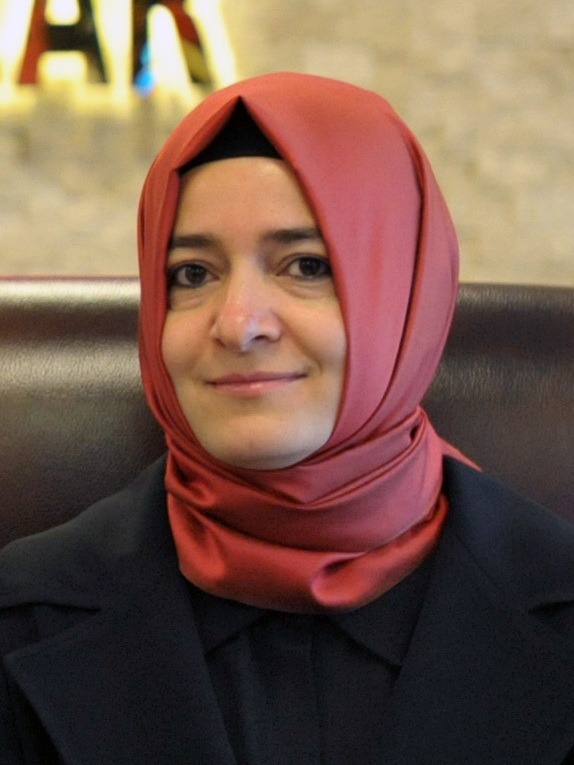
However, the first black swan struck in the fall. The so-called investment fund crisis began. At the end of September, the Financial Markets Supervisory Authority decided to liquidate 131 funds that did not meet the requirements. On the one hand, nearly half a million Turks were affected, having lost their savings in these funds; on the other hand, several dozen individuals, armed with insider information, withdrew their money from the funds before they were liquidated or profited from the drop in share prices, becoming multimillionaires. Every single one of them turned out to be a member of Erdoğan’s ruling party. Among the suspects and those charged are former minister and Erdoğan’s deputy in the AKP, Fatma Betül Kaya; former lawmaker and Erdoğan’s chief advisor, Ertan Aydın; former Minister of Economy Nihat Zeybekçi; and dozens of others. Against the backdrop of these individuals embezzling money from investment funds, the attempt to imprison opposition mayors on corruption charges appears particularly cynical.
No one in their right mind can believe that in a country where all central power has been concentrated in Erdoğan’s hands for 23 years — and where, since 2016, the police, the prosecutor’s office, the courts, and the army have been under his complete control — it is exclusively opposition politicians who have dared to engage in corrupt practices.
Of the 450 opposition mayors, nearly a hundred have already been removed, yet not a single mayor from Erdoğan’s party has come under suspicion.
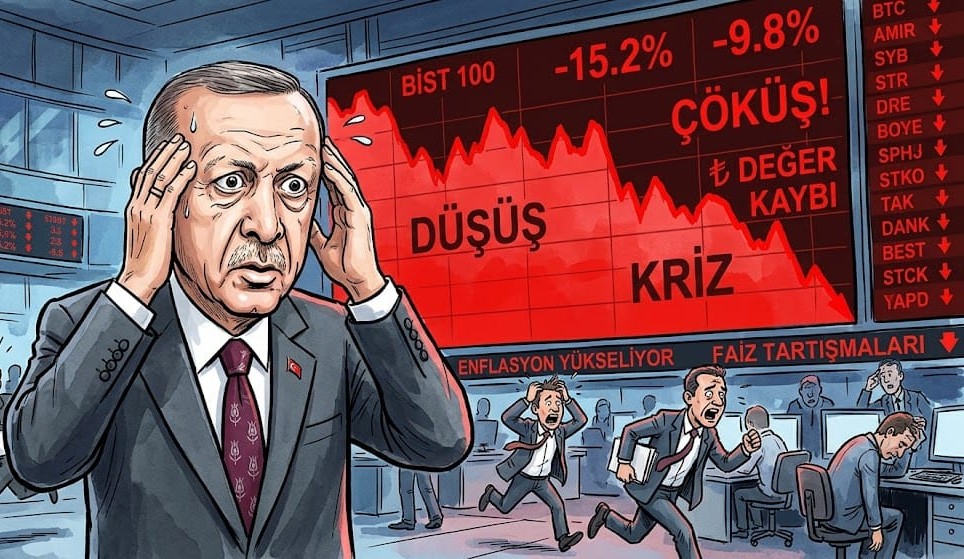
And then, all of a sudden, a stock market crisis. It has already led to the first electoral losses, as stated by one of the former AKP deputies, Şamil Tayyar — more than 6% in two weeks. This story is just beginning, and no one knows how many more names the investigation (controlled by the government) will uncover. However, one thing is already clear: it won’t be possible to sweep the scandal under the rug. This isn’t some quiet embezzlement of the budget that can be hidden for decades. Voters haven’t lost what they paid in taxes — they’ve lost their own, hard-earned money. And it’s going to be incredibly difficult to quell their anger.