ENG

Twelve years is not just a period of time equal to a cycle of the Eastern calendar. From a sociological perspective, an entire generation takes shape during this time. At the same time, people who have lived outside Crimea for more than ten years continue to speak on behalf of the entire population. The digital environment creates the illusion of constant presence: activity and discussions on social media, constant livestreams, roundtables, intelligent voices on podcasts, and hundreds of articles.
However, behind this outward facade lies a harsh reality — we are dealing with people who have radically different experiences, different perspectives, and, most importantly, an incomparable cost for the words they speak.
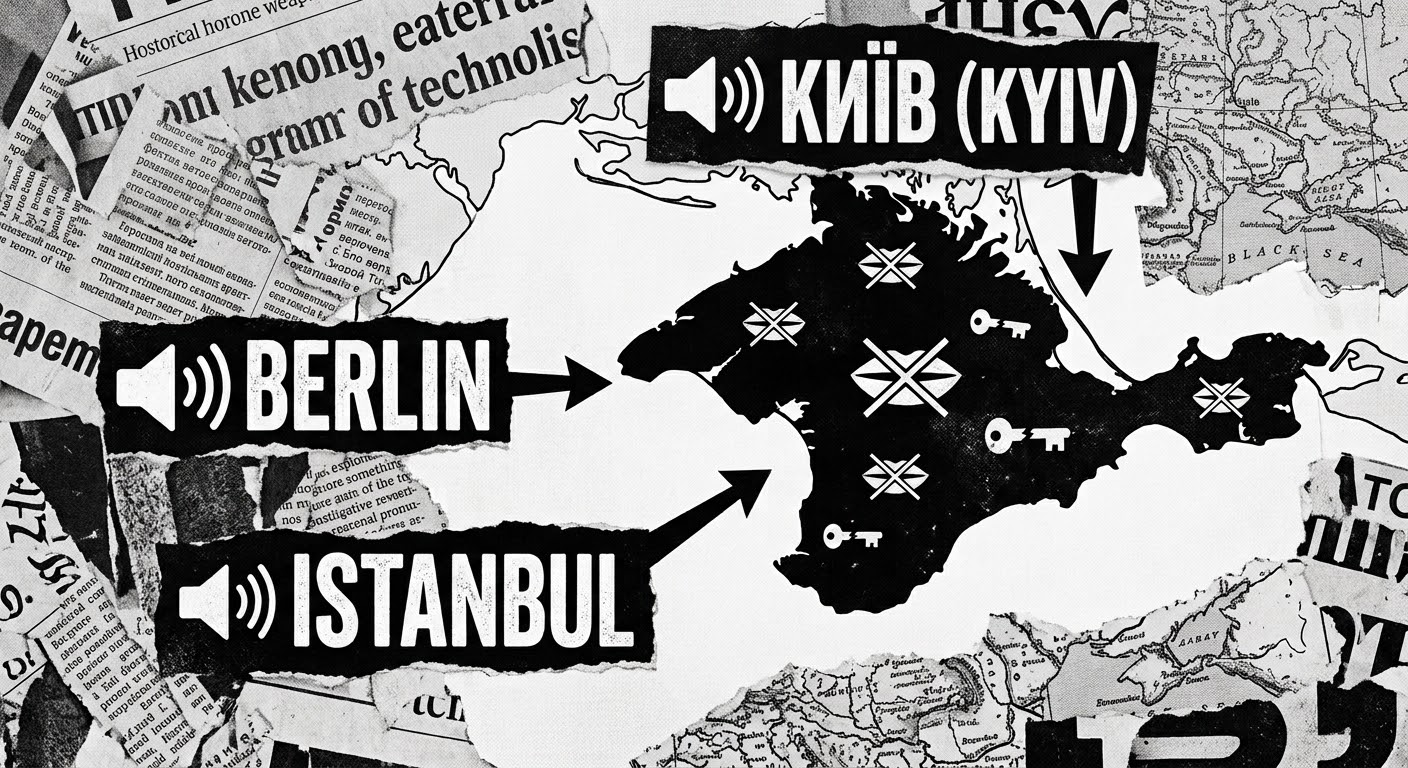
The main divide runs along the line of everyday safety. For a person in Kyiv, Istanbul, Warsaw, or Berlin, public speech remains an element of discussion or political capital. A person in Crimea lives in a reality where every gesture, sign, or phrase is weighed on the scales of personal freedom and family safety.
This is how alienation sets in. Words spoken about Crimea outside of Crimea are abstract and empty to a resident of the peninsula. Within Crimea, every statement is subject to self-censorship for physical survival.
This disconnect has been described in sociological studies of the relationships between diasporas and their historical homelands. From the Cuban diaspora in Miami to the Irish and Armenian movements, a common pattern emerges: the external community tends to rely on a static image of the country as it was when they left.
The diaspora forms a symbolic, rigid agenda, while people inside Crimea are forced to adapt daily to a changing world. At the same time, they develop flexible mechanisms of self-preservation that are often invisible and incomprehensible from the outside.
This is where the phenomenon described by Benedict Anderson as “nationalism at a distance” comes into play.
From a position of safety, a member of the external group is able to be as uncompromising as possible. They make radical demands without feeling any personal responsibility for their consequences for those who remained in their homeland. This safe distance encourages maximalism, reducing a complex inner life to an ideological framework.
Social media only intensifies this process, creating a false sense of “being in the know.” To those speaking from abroad, it seems as though they continue to sense the atmosphere on the streets, the mood in the cemaats, and the everyday language of the people. But digital platforms reflect only what can be safely written and shown about Crimea. As a result, high-profile statements from studios abroad not only fail to resonate with Crimean reality but are met with silent irritation when people who face danger daily in the realities of their homes are required to conform to external standards.
Of course, external advocacy is necessary. Within the peninsula, public defense of rights is limited, and someone must speak out on international platforms. But there is a line between representing interests and attempting to dictate an emotional agenda. When this line becomes blurred, external discourse turns into a monologue directed at itself or at a foreign audience, yet completely detached from those for whom it was originally intended.
Over the past 12 years, a new generation has grown up within Crimea. Their socialization took place without the involvement of national institutions. Some children who were 10 years old in 2014 already have children of their own. They have developed their own language of survival through work, family ties, and local mutual aid. They try to preserve what is important without making a show of it or using grand words.
Many in this generation are not even aware of those who, for all these 12 years from outside Crimea, have been speaking about Crimea through the lens of their own perceptions. And when Crimean Tatars from Crimea are offered approaches from 12 years ago, a mental barrier arises.
Recognizing this disconnect does not mean renouncing kinship. It means demonstrating maturity. Speaking on behalf of a people while in safety and living alongside that people through their trials are two fundamentally different experiences.
Until outside speakers recognize this gap and find ways to engage with modern Crimea and its realities, the chasm between rhetoric and reality will only widen.