ENG

One and a half million cancellations in June alone. Crimean hoteliers have lost hope of making any money this summer and are now going to great lengths to “break even.” Hotel rooms and apartments have dropped in price by a factor of 3 to 5. And some of their owners are no longer able to compete with others.
“Everyone wants to make at least a few cents. That’s why they keep lowering the price. They end up with some ridiculous figures. Right now, prices have dropped so low that I’d have to fill the hotel with guests just to cover the costs of maintaining it and paying staff salaries. But even on my best days, two-thirds of my rooms are empty — and most of them are in the premium segment. So right now, I’m spending one and a half times more on keeping the hotel running than I’m earning. “If nothing changes, I’ll have to close in August before I go completely bankrupt,” says the owner of a mini-hotel in the village of Kuchuk Ozen (Malorichenske), sharing his calculations.
The main customers of seaside resorts these days are the Crimeans themselves. Both hoteliers and travel agencies have focused their advertising efforts on them.
“And what’s vacationing in Crimea like these days? No gas within a radius of 500 kilometers, no reliable cell service or internet, power and water outages, and nightly bombings to boot. Who wouldn’t be scared by that? That’s right — Crimeans aren’t scared by it. They live in these conditions. So why not take a vacation under the same conditions? Especially since you can get to the hotel by bus without spending a fortune on gas or wasting time at gas stations,” says Mykola, an employee of a Simferopol travel agency, in an interview with CEMAAT.
As an example, he cites the four-star “Yalta-Intourist” hotel, which has been well-known since Soviet times. It has launched a “weekend program” and transports people from Simferopol and Sevastopol free of charge so they can check into a room for two weekends. Last summer, it was impossible to book a room here for less than three nights — at a price three times higher. Social media is flooded with offers from hotels that in previous years were fully booked as early as winter.
“Well, it’s not exactly like you get everything included for just 100 rubles. But while last year I could only rent a modest little house somewhere out in the boonies for 4,000 rubles, now I can easily find a luxury place with a pool right on the South Coast. In short, I can now vacation in places that were completely out of my price range my whole life,” admits Andriy from Sevastopol.
While hotels are managing to stay afloat to some extent thanks to local vacationers, the rest of the resort sector has practically died out. Souvenir vendors joke grimly that they’ll pay their taxes with “Crimea Is Ours” T-shirts and survive the winter on Crimean Bridge magnets. According to one Yevpatoria entrepreneur, he paid one and a half million rubles for a spot on the waterfront in the spring, but now his daily profit doesn’t exceed a thousand rubles. At the same time, there are no other jobs in the city.
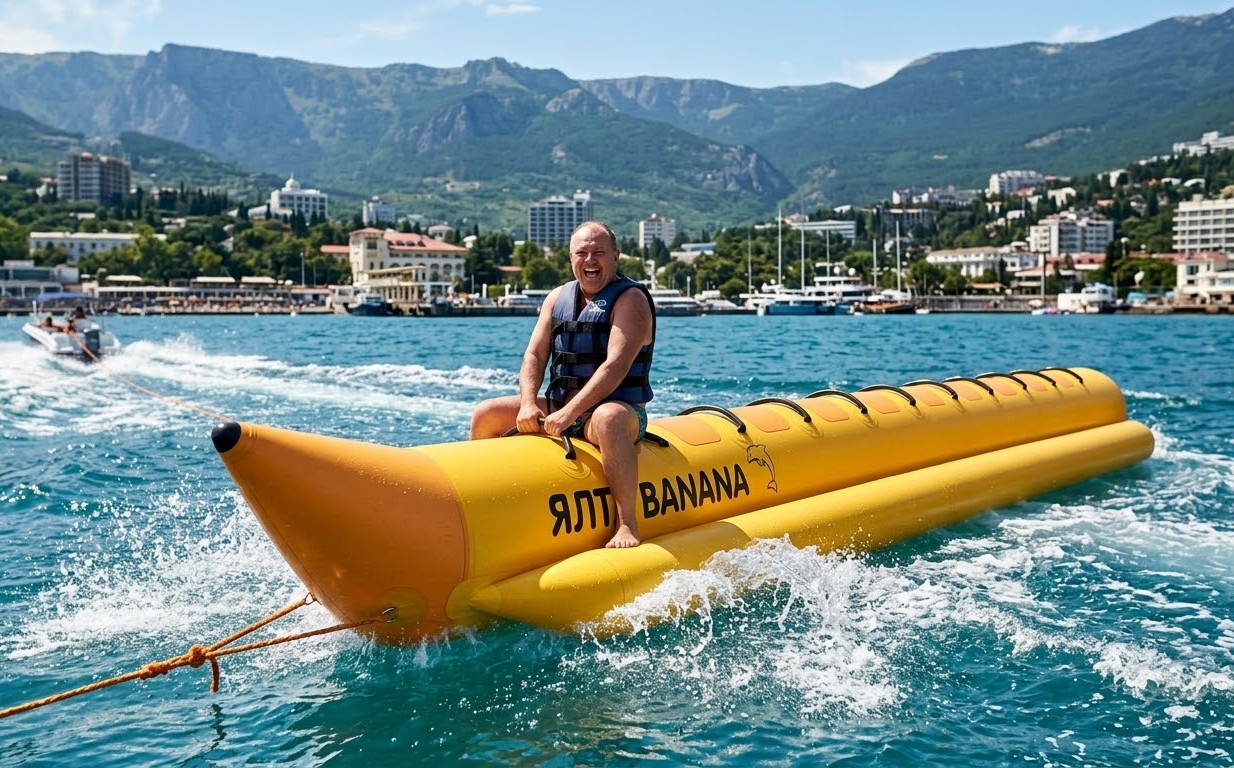
The owners of water attractions are also feeling discouraged. Banana boats and catamarans aren’t bringing in any money for their owners these days; on the contrary, they require scarce supplies to operate.
“You burn a liter of diesel whether you’re taking one person out or ten. But right now, you can only take one person out. There aren’t enough people on the beaches to put together a full group even in an hour. On a good day, the guys barely break even. But things are even worse for the beach rental operators. Sometimes there isn’t a single vacationer for several days. But you still have to pay the rent, pay for cleaning — the lounge chairs and umbrellas wear out even without people using them — and we’re not exactly sitting around doing nothing; we need to be paid something, too,” says Alexei, a lifeguard from Feodosia.
Restaurant owners are also at their wits' end. Vacationers are stopping by cheap coffee shops, but the expensive ones are empty.
“How can I put this without offending anyone? All these daredevils… I mean, people who value an early reservation more than their own lives — they don’t go to restaurants. And you can’t impress the locals with our delicacies. That’s just how we live. And then you open Instagram: ‘Oh, I’m Masha, I’m from Uralmash, I’m in Yalta right now, it’s so beautiful here, there’s no war…’ Where are you, Masha? Hey, go eat,” says the manager of one of Yalta’s restaurants, not attempting to hide his irritation.
Rustem, a tour guide from Bakhchisaray, isn’t in a much better mood either. Last year, jeep tours were his main source of income. “Only a madman would agree to pay what such a tour would cost this year,” the guide remarks ironically.
“All these Aksyonovs and Kryuchkovs are just driving me crazy—the ones who keep saying everything’s about to get better. ‘Just wait two weeks, we’ll sort everything out’ — okay, we’ll wait. “Oh no, two more weeks” — fine, we’ll wait some more. “Yay, we’ve found a solution; we just need to wait a little while,” — but you’ve really gone too far. Will summer wait, too? And my mortgage along with it?” the tour guide exclaims indignantly.