ENG

“We were punished for refusing to be a controlled opposition that never wins and has no ambition to come to power.” These were the words of 51-year-old Özgür Özeli, spoken two days after the Ankara Regional Court stripped him of his position as leader of the Republican People’s Party on 21 May.
The court has reinstated 77-year-old Kemal Kılıçdaroğlu as leader of the Atatürk Party; he had led the party for 13 years before being ousted at the CHP (Cumhuriyet Halk Partisi, Turkish for Republican People’s Party - Ed.) congress on 4–5 November 2023.
The lawsuit was filed by one of the disgruntled party members, Lütfü Savaş, the former mayor of Hatay. After losing the 2024 election, he blamed the party’s new leadership for the defeat. And when he was expelled, he began seeking revenge, claiming that some delegates at the party congress had been bribed to secure Özgür Özel’s election over Kemal Kılıçdaroğlu.
The court of first instance dismissed the claim. However, the appeal proceedings have dragged on, and it has become clear that it is at a stage where the authorities are preparing to strike a blow against their most dangerous rivals. There is still no evidence of bribery. The first arrests of those suspected of bribing delegates at the party congress took place only today, 23 May 2026. And it is by no means certain that the cases will result in court convictions.
Most prominent Turkish legal experts argue that the Turkish judiciary, in removing the leader of the opposition party, has shown excessive ingenuity even by the standards of the Erdoğan era. Matters relating to national and internal party elections are governed by specific legislation, and the Supreme Electoral Council (the equivalent of the Central Election Commission) acts as the judicial body in this regard. However, the court applied the principles of private law, as if the case concerned a divorce or inheritance.
However, even in such a case, any impact on the outcome of the party leadership election could only be considered once the facts of bribery had been established, the allegations confirmed, and a subsequent assessment made as to whether the bribery of specific delegates had influenced the result of the election of the new leader.
However, even this does not give the authorities the right to replace party leaders at will. Should doubts arise regarding the fairness of elections at any level — be it a national party congress or district assemblies — there are only two days to lodge a complaint, after which the Central Election Commission grants the party or its relevant regional branch a maximum of two months to hold a new congress and call for a re-vote. All this is laid down in Article 21 of the Turkish Law on Political Parties, designed to protect political forces from excessive state influence.
Özel received over 800 votes at the congress, while Kılıçdaroğlu received just slightly over 500. The 300-vote margin cannot be attributed to vote-buying, given that the election of delegates to any congress in Turkey is a complex and strictly regulated procedure overseen by the Supreme Electoral Council. Moreover, the meeting took place at a time when Kılıçdaroğlu himself was leading the party.
Protests outside the party’s headquarters in Ankara in support of the party’s young leader, Özel, who had been removed by the courts; a flood of millions of comments and posts on social media; and the emergence of the ‘Hayin Kemal’ meme (Traitor Kemal) forced the old-new CHP leader Kılıçdaroğlu to pretend he was ready to compromise.
On Thursday, when he heard the demonstrators chanting “Traitor Kemal”, he felt ill, and journalists discovered that even the neighbours with whom his family had been on close terms for 15 years had turned their backs on Kılıçdaroğlu.
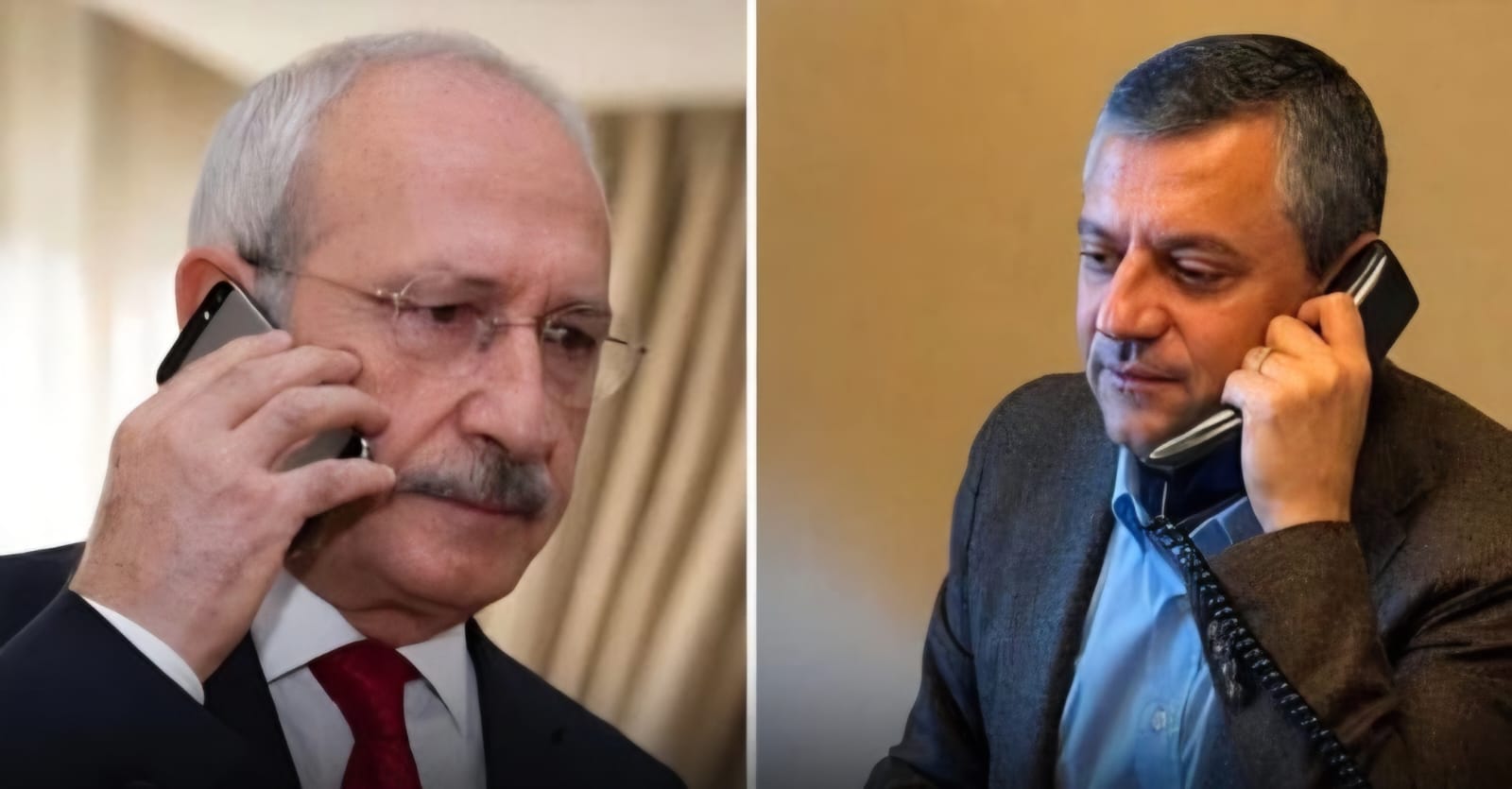
On Saturday, Kılıçdaroğlu and Özel spoke on the phone. According to Özel, Kemal Bey is prepared to convene an extraordinary congress as soon as possible to put an end to the disputes over the party leadership. However, Kılıçdaroğlu is demanding that delegates be re-elected from scratch, a process that will take between 7 and 12 months.
Özel has not yet left the party chairman’s office and remains there around the clock to prevent a symbolic takeover of the CHP leadership.
In Turkey, the location of any institution is not merely a symbol but also a mark of legitimacy. In Ukraine, this is recognised only in relation to parliament, and the sole instance of a special session being held outside 5 Hrushevsky Street — at the Ukrainian House in January 2000 — is referred to as the ‘velvet parliamentary coup’. Debate continues to this day as to whether such actions can be accepted in peacetime. In Turkey, this is the norm for all institutions, which is why Kılıçdaroğlu is currently forced to lead from his own private office, which he set up after losing his post in 2023.
At present, bailiffs are reluctant to use force to vacate the party’s premises for the ‘parachute candidates’ appointed by the court in Ankara. However, Kılıçdaroğlu is already signing party decisions recognised by the Turkish authorities. In particular, he has dismissed three of the party’s official lawyers and withdrawn the appeal to the Supreme Court. The Özel leadership had managed to file this appeal on Thursday evening, following the controversial decision to reinstate Kılıçdaroğlu.
It has emerged today that the 77-year-old political ‘paratrooper’ has already taken control of all the party’s accounts.
However, this whole battle for the presidency is no ordinary internal party conflict. The court’s ruling has outraged every single political party in Turkey, including those that support the incumbent President Erdoğan.
If it is possible today to treat a party in this way — a party that remains a symbol of the Republic — then tomorrow the authorities will have no trouble ‘reworking’ any party they do not approve of.
Turkey realises that the issue is not about Özel, but rather that he has shown resolve and has not backed down from the idea of putting forward Istanbul Mayor Ekrem İmamoğlu as a presidential candidate in 2028.
The authorities have already attempted to demonstrate the full extent of the state’s power, instead of resorting to the backroom deals that Özel refused to accept: İmamoğlu was unexpectedly thrown in prison, and over the past eighteen months, the authorities have removed some fifty elected representatives of the Republican People’s Party from their mayoral posts. A small number ‘voluntarily’ left the CHP and joined the Justice and Development Party (AKP). This was the move taken by party members who had endured decades in opposition. However, even after this, Özgür did not waver; instead, he was energised and became one of Turkey’s most popular politicians, drawing hundreds of thousands of Turks to rallies every week.
And the standard statistics on achievements speak for themselves. In his 13 years at the helm of the party, Kılıçdaroğlu has lost 13 parliamentary, presidential, local election campaigns and referendums. In the two and a half years under Özel’s leadership, the party managed to run just one campaign and emerged victorious straight away, restoring the CHP to the top spot with a 38% result – a figure Atatürk’s political force had not seen since 1977.
Explanatory note: The title of this text uses literal translations of the names Kemal Kılıçdaroğlu and Özgür Özel. Kemal, derived from the Arabic ‘Kamal’, means perfection or maturity; however, with a slight alteration, this word means camel (Gamal, Jamal), as in most languages, the letters G and K are often interchangeable. Özgür is a very common Turkish word meaning freedom and independence.



.jpeg)