ENG

Ismail and Ridvan are cousins. They were born in Crimea when it was part of Ukraine. They grew up together in a village near Qarasubazar (Bilohirsk). After the 2014 occupation, Ismail moved to Kyiv, while Ridvan remained in his homeland. He graduated from medical college and was drafted into the Russian army in the fall of 2022. Ismail was mobilized into the Ukrainian army in 2024.
This is a tragedy all too common for Crimean Tatar families, one that has repeated itself every 20 to 30 years over the past 250 years. The loss of their state in 1783 turned the Crimean Tatars into cannon fodder for foreign armies. Primarily for the Russian army — but on the other side of the front line, it is often not only the Russians’ enemies but also the Crimean Tatars’ own brothers who find themselves fighting.
A quarter of a century after the annexation of the Crimean Khanate, during the War of 1812, more than two thousand Crimean Tatars fought in the Russian army against Napoleon’s forces. Their brothers — the Lithuanian Tatars — were on the French side.
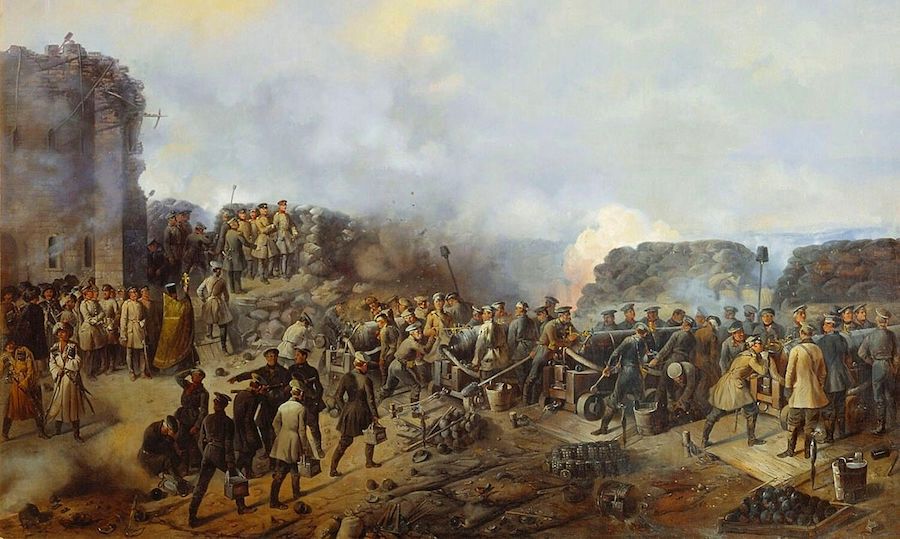
In the Crimean War of 1853–1856, the Crimean Tatars became adversaries right on the peninsula itself. Some Crimeans took part in the defense of Aqyar (Sevastopol) and were even awarded St. George’s Crosses for taking British soldiers prisoner, while others defected to the Ottoman army in the hope of liberating Crimea from the Russians. This is how the first myth about the “betrayal of the Crimean Tatars” arose. The Russian occupiers took out all their anger over their defeat in the war on the indigenous people and deported many Crimeans to the Ottoman Empire.
One of the most popular Crimean Tatar folk songs is called “Port Arthur.” It emerged after the mass conscription of men from Crimea for the Russo-Japanese War of 1904–1905. At that time, there were fewer than 100,000 Crimean Tatars on the peninsula. About a thousand were drafted into the war. And then came World War I, the Finnish War, World War II, the Afghan War… For each of these campaigns, its instigator had a reason. But for the indigenous people, they resulted, “at best,” in the loss of their gene pool, and at worst, in accusations of disloyalty, repression, and deportation. Flags, weapons, and propaganda methods changed. What remained constant was the choice: flee Crimea to survive, or stay and die for the interests of others. Even the deportation of 1944 did not put an end to the issue of “donorhood.” It was forbidden to live in one’s homeland “for treason,” but it was both possible and required to fight in aggressive military campaigns — from Czechoslovakia to Afghanistan.
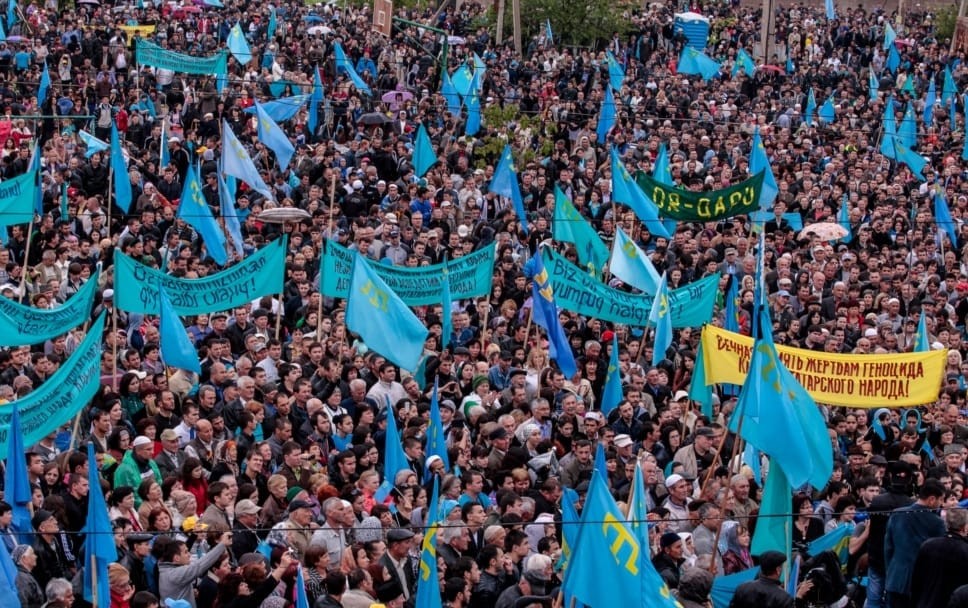
Crimean Tatars were not allowed to return to their homeland until the late 1980s — to a barren place, without land or housing. Ukraine — first Soviet, then independent — received those who returned with caution. The Crimean Tatars view the long-standing disputes over land rights and representation in government as a debt that remains unpaid to this day. They were not officially recognized as an indigenous people at the state level until March 2014, by which time the peninsula had already been seized. And it took another 12 years for the Mejlis to be officially legalized. Nevertheless, among the Crimean Tatars who left for mainland Ukraine after the occupation, many voluntarily took up arms in 2022 — as well as many who were “busified.” The fallen are mourned by their families in Kyiv, Odesa, and Lviv, as well as by their relatives in Crimea.
Those who decided to remain in their homeland despite the occupation generally did so fully aware of the consequences of their choice. In violation of all international conventions, Russia is conscripting residents of occupied Crimea into its invading army, and it is often impossible to avoid this. Fabricated cases, blackmail involving children and loved ones, and pressure on young people in universities and colleges — Moscow has a vast arsenal of methods for “voluntary” mobilization. Some might argue that ending up in the Russian army is also a choice, since it was possible to leave Crimea. This is partly true. But the trauma of deportation prevents Crimeans from helping Moscow rid Crimea of them once again.
We in no way equate Ukraine with Russia. It is clear who is the victim and who is the aggressor in this war. But neither side views the Crimean Tatars as a third party with its own interests. Meanwhile, the most pressing of these interests has become the very physical survival of the people. There are already fewer of us than there were 200 years ago. And with each passing year of the war, our numbers dwindle further: after all, more and more Crimean Tatar families have relatives in both armies.
Ismail and Ridvan last saw each other before the pandemic, in 2019. Before the full-scale invasion, they had planned to meet somewhere in a neutral country, but they didn’t have time. They agreed over the phone to meet at home, in Qarasubazar. At the same time, both brothers understand that both countries for which they are now fighting consider this place their home.