ENG

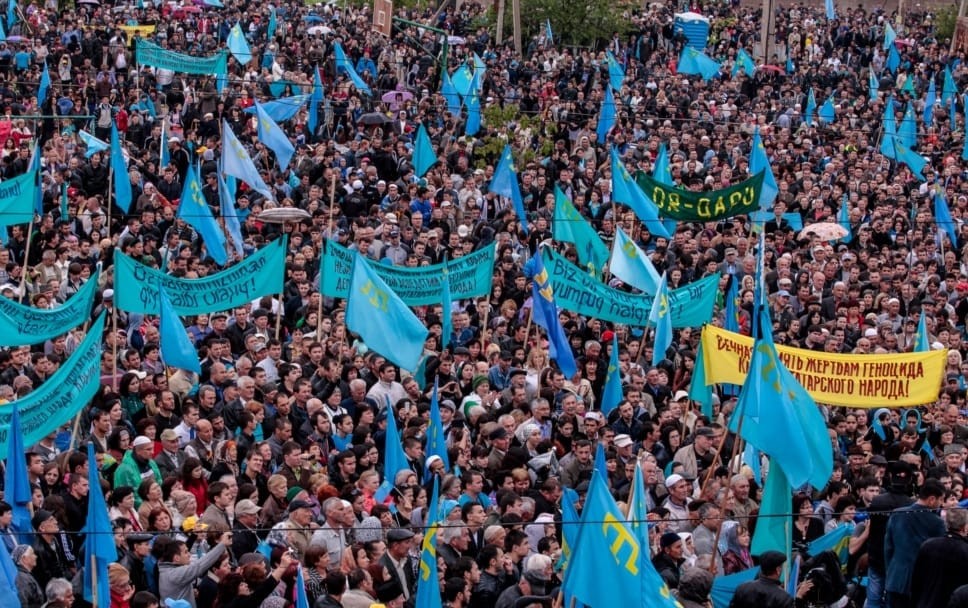
In his recent article “The Crisis of Crimean Tatar Politics,” Osman Pashayev candidly offered an uncomfortable diagnosis: when institutional politics comes to a standstill, chaotic activism takes its place, and the people risk gradually slipping into a “memorial” stage of existence. This is a rather bold and powerful statement. However, this discussion has a direct continuation, without which the picture will remain incomplete.
Who, exactly, was supposed to prevent this disintegration outside Crimea and become the very focal point of unity?
More than ten years ago, when I left Crimea due to the Russian occupation, I (like thousands of my compatriots) did not set out in search of comfort. Many of us were driven by the belief that, from the outside, we could do much more for Crimea by becoming the free voices of our people.
At first, the large Crimean Tatar diaspora in Turkey seemed like a potentially powerful space for meaning and organization. Here, there are community associations — dernek — that have existed for half a century, as well as resources, connections, and media attention.
However, reality quickly brings one back down to earth. Stories about “millions of Crimean Tatar descendants” in Turkey, for example, are so widely circulated that they become abstract statistics. Of these hypothetical millions, perhaps only tens of thousands retain even basic elements of Crimean Tatar identity — sometimes in language, sometimes in cuisine or traditions.
That said, the potential for consolidation existed not only in theory: in 2015, dozens of Crimean Tatar ethno-cultural organizations in Turkey even managed to unite under a common platform. It would seem that the impetus had been set. But a sustainable, functioning mechanism for lasting unity never materialized. Various diaspora communities continue to operate exclusively within their own narrow spheres. But the issue is not limited to Turkey, nor is it solely about the mutual alienation between the “old” diaspora and the wave of migrants from Crimea after 2014.
Crimean Tatars who have emigrated to Europe and North America over the past twelve years are just as fragmented. Not only do the newcomers fail to integrate into existing organizations and activist groups, but they also do not form large, systematic associations among themselves, instead splitting into small circles based on personal or professional interests.
At the same time, within Crimea, people harbor no illusions about those who, from outside the peninsula, create the appearance of vigorous work for the good of the people. This is by no means a speculative assumption, but a conclusion drawn from my regular, long-standing conversations with those who live on the peninsula. With people who shape the meaning of life in Crimea and hold together the social and cultural fabric of Crimean Tatar society from within.
Of course, when Crimean Tatars living in Crimea have close friends or relatives among these external activists, they retain a specific, individual belief in the sincerity of that particular person’s actions. But on a general level, the pretense is unmistakably evident — in Crimea, people see the loud statements made from the safety of abroad as nothing more than the creation of an illusion, and they have long since stopped expecting any real help. If any thought regarding the external efforts of individual activists still lingers, it is only on a pragmatic level of cautious acceptance: “If something comes of this, so much the better.” But no one in Crimea believes that their only way out and salvation lie in the hands of those outside their homeland.
And this raises a key question that cannot be directed at the average person. The average person is not obligated to build national systems. They survive, work, raise children, manage their daily lives, or simply lie on the couch.
But for certain figures or institutions that have been perceived by society for years as the highest representative authorities, the measure of responsibility is different. True representative leadership is, after all, not just about being present on the international stage and making loud public statements.
Ideally, it is first and foremost invisible, meticulous, and difficult architectural work. It is the ability and desire to bring together those who are accustomed to remaining silent, to build bridges between disparate and conflicting groups in different countries, and to transform hundreds of small initiatives into a functioning system, much like the mechanism of a clock.
Over the past twelve years, every opportunity has been available to assemble this Crimean Tatar “clock.” New people, new families, new professionals, and new energetic individuals have joined the diaspora — people who could be useful in every sense. But for some reason, a large-scale, long-term, far-sighted unifying project — one that could offer them a common agenda and bring everyone together around one table — never materialized.
It is easiest to explain this disunity by attributing it to the “complex nature” of the community itself or to everyday conflicts. This is a simple ploy that shifts responsibility away from those whose strategic task is precisely to identify common ground above and beyond any minor differences. Chaos becomes the norm precisely where a viable alternative has long been absent.
Since our society has, over decades, developed the habit of checking every move against “signals from above” (not necessarily official ones) and taking any action for the good of the people only when “those in power” approve it (and any action without such approval risks immediate discredit), the responsibility for the absence of this dynamic can no longer be shifted onto the people themselves.
A discussion about the future beyond Crimea cannot be reduced to the question of why people do not unite on their own. The main — and uncomfortable — question lies elsewhere: has anyone actually built this system of unity in practice, going beyond mere declarations?
“For forty years, the last two Jews of Kabul argued over the right to lead the synagogue” — this beautiful yet cruel metaphor at the end of Osman Pashayev’s article is disheartening. Among the Crimean Tatars outside their homeland, there are not just two people or a single warring community. We have the potential of a million people that we need to be able to activate, and we have not yet lost our connection to home.
But this potential will remain unrealized unless the age-old ritual of chieftainry is replaced by crisis managers of the national idea — people who can effectively and quickly build a system of unity among the Crimean Tatars, rather than simply demanding loyalty from everyone. If this catalyst does not appear in the near future, it will never appear, and then time will inevitably take away what matters most — the chance to remain a living people, rather than a line in an ethnographic reference book.