ENG

A new wave of historical falsification has begun in Crimea. According to our sources, at least three schools on the peninsula have been ordered to display posters featuring Cyril and Methodius. The posters claim that the creators of the Cyrillic alphabet discovered ‘Rous’ script’ in Chersonesos (Korsun) in the 9th century. The conclusion is clear: Crimea was the spiritual foundation of Moscow not only long before its emergence, but also before the baptism of Prince Vladimir.
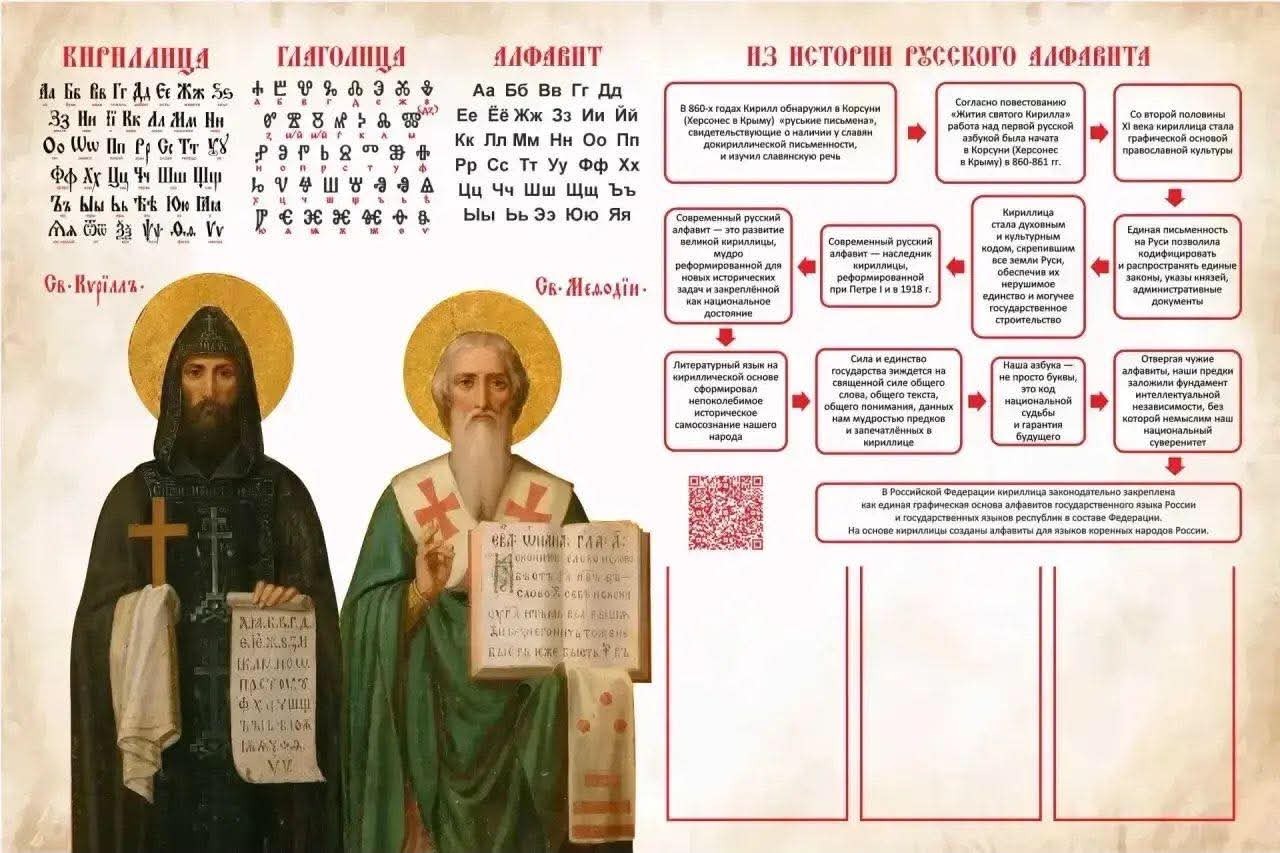
Putin’s latest fabrication is based on a myth that arose from errors made when transcribing the document *The Extensive Life of Constantine the Philosopher*. This is essentially a biography of Cyril (who was named Constantine at birth), written in 869 by his pupil Clement of Ohrid. However, the original “Life” has not survived, and the oldest copy dates from the 15th century. In other words, 600 years after Cyril and Methodius visited Crimea, a text appeared claiming that the brothers had seen strange “Slavic letters” in Chersonesos. And another six centuries later, this text “surfaced” in Moscow. In fact, as early as the last century, the claim that Cyril and Methodius had found some “Rous scripts” in Chersonesos caught the attention of researchers. And immediately, three of them – the Frenchman André Vayon and the Americans Horace Lant and Roman Jakobson – independently found a logical explanation for it. It was a mistake made by the monk who was copying the text. The enigmatic word “Rous” most likely means “Surian”, that is, Syriac. In Korsun, one of the Byzantine colonies, there were many texts written in the Syriac script. And Cyril was not only the founder of the new alphabet, but also a leading linguist. Unlike the copyist, who saw a word new to him and accidentally swapped the letters around.
Ukrainian historian Oleksiy Mustafin is delighted by the occupiers’ latest antics:
“It’s strange. People from Thessaloniki, a semi-Slavic city, went to Crimea to study some ‘Slavic language’, but for some reason they still translated the Holy Scriptures into Macedonian (Old Bulgarian).”
Russian “historical discoveries” are also described as propaganda fabrications by Michael Moser, professor at the Institute of Slavic Studies at the University of Vienna:
“This whole story is complete nonsense. The so-called ‘Rus’ letters in Crimea mentioned in the ‘Life of Methodius’ could not have been Cyrillic. The point is that the word ‘Rus’’ at that time did not mean ‘Slavic’ but rather ‘Scandinavian.’ Moreover, we assume that the script created by the Apostles of the Slavs was Glagolitic, whereas Cyrillic, which was clearly based on the Greek alphabet, was developed only later. After all, children are told that Saint Cyril learned the Slavic language in Crimea. In reality, the brothers Cyril and Methodius knew the Slavic language from their homeland, the area of present-day Thessaloniki and its surroundings. Had they relied on an East Slavic dialect, Church Slavonic would have looked completely different. So once again: all of this is nonsense. The ‘Rus’ letters have been interpreted in different ways in serious Slavic studies: some scholars believed they referred to Scandinavian runes. Others argued that the original text may have said ‘Surian’ letters, meaning Syriac. All of this propaganda is produced to prove the ancient ‘Russianness’ of Crimea. This can only be done through historical fabrications. That is why it does not work outside the propaganda bubble.”
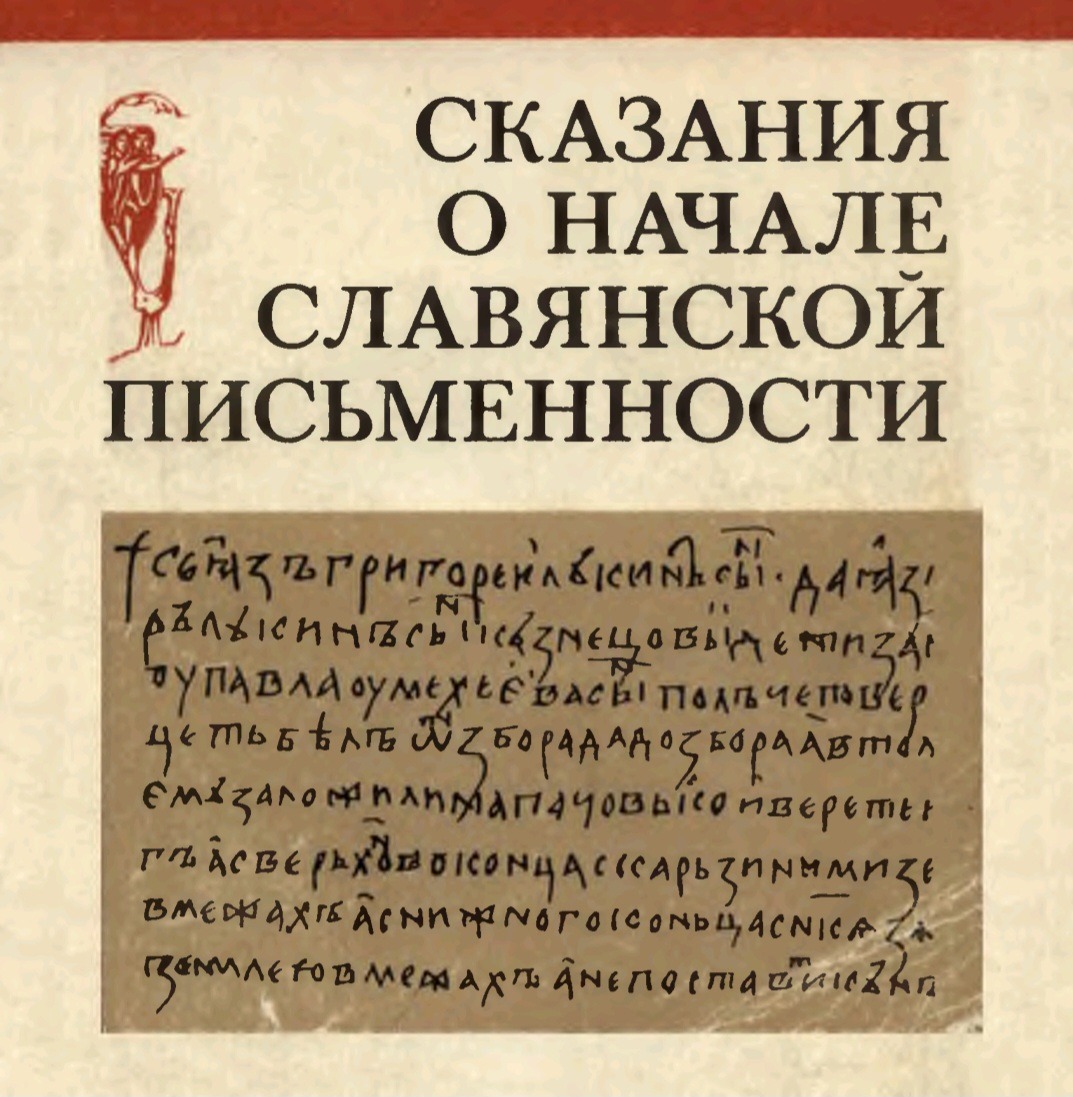
Until recently, Russian academia had not resorted to such a high level of fabrication. As far back as 1981, a translation of Old Slavonic texts on Cyril and Methodius was published, accompanied by commentary from the historian Boris Flori. In particular, it examines all the hypotheses regarding the ‘Rous’ scripts. It is freely available online.
And even those historians who are inclined to read “Rous” as “Russian” believe that this was the term used by the Greeks in the 9th century to refer to the East Gothic language. It was spoken in Crimea until the 16th century and had already disappeared by the time of the Crimean Khanate. In any case, there can be no question of any Slavic alphabet.