ENG


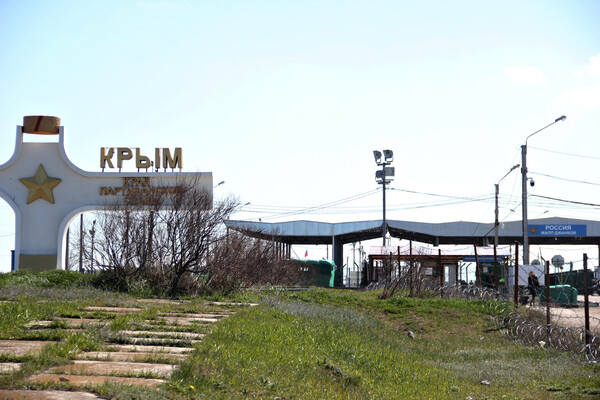
The Islyam-Terek (Kirov) District is one of the agricultural hubs in Crimea. Since 2015, its residents have known what it means to be left without water. At that time, during the civilian blockade of the peninsula from the Kherson region, the blockaders blew up power lines, leading to a blackout. The pumps that drew water from the North Crimean Canal stopped working. In 2023, the Russians, by blowing up the Kakhovka Hydroelectric Power Plant, effectively cut off northern Crimea from the Dnieper River’s water supply.
Furthermore, the large-scale construction projects of Moscow following the second annexation of Crimea remain just as ostentatious as they were in Potemkin’s time. The Russians build only large-scale projects — such as the “Tavrida” highway — so that they can be seen from space. However, ordinary water mains in the villages of northern Crimea were never there, and still aren’t. People live just as they did in the days of the Crimean khans: if there’s a well, there’s water. It’s even worse if they’ve modernized and drilled a well; water from it can only be drawn when there’s electricity. And there have been problems with the power supply for the past two weeks: outages last from 3 to 5 hours every day.
There’s no panic, because people here have been bracing for the worst for 12 years now. Locals aren’t leaving and have no plans to do so at the moment, but those who moved to Crimea from Russia after the annexation are leaving the area en masse. That said, Islyam-Terek isn’t representative in this regard; the largest number of Russians settled in Akyar (Sevastopol) and the surrounding coastline. It is from there that the largest flow of people wishing to leave Crimea originates. The remarks by Sevastopol Gauleiter Rozhvaev about the “city’s third line of defense” do little to inspire the newcomers to patriotic self-sacrifice.
Rustem and Vadim, residents of Islyam-Terek, are neighbors who work in the finishing trade. Their main clients are the owners of small hotels and restaurants in Sudak and Feodosia (Kefe). The four years of war did not spoil their vacation in Crimea. In February, the men received an order from a businessman to complete the finishing work on a three-story hotel. The owner was in such a hurry to make a profit that by the end of May, he had built the framework for another wing and extended the contract for Vadim and Rustem to include tiling and plastering the rooms. However, by spring, Ukraine’s counteroffensives had begun, along with the widespread destruction of the occupiers’ military infrastructure.
All the rooms in the newly completed hotel were booked through the end of August. It was precisely with this revenue in mind that the hotelier invested in the construction of a second building. Now, Russian tourists have canceled their vacation plans, and instead of a second hotel, the entrepreneur is left with an empty, unfinished building and debts.
To get gasoline, some residents of Islyam-Terek drive “across the bridge.” This geographical term needs no further explanation here: everyone understands that it refers to the Russian mainland. However, not everyone is willing to take the risk of transporting the permitted 200 liters per car.
On Wednesday, gasoline sold on the black market in the Islyam-Terek District cost 320 rubles; on Thursday, the price jumped to 400 rubles per liter.
The most severe power outages are in Akyar (Sevastopol). The city’s occupying authorities promised to restore power by the evening of June 24. As of now, the restoration of power throughout the city has been postponed three times. The latest promise is for full restoration by the end of the day on June 26, but with the caveat “if Ukrainian attacks do not interfere.”
There are no food shortages at the moment. However, wholesalers say prices will rise starting in July. The state of emergency declared on June 26 by the occupying authorities of Crimea and Sevastopol will allow officials to intervene in pricing and intensify repression “for spreading false information.”