ENG

(Intro by Tom Cooper)
Hello everybody!
Amid a near-total collapse of the PKK (i.e. the Pentagon-imposed ‘Syrian Democratic Forces’, ‘SDF’, in north-eastern Syria), yesterday, it’s hard to remain focused on Ukraine. Yes, so also when about 80% (and more, depending on the Oblast in question) of the country is without electricity, heating, and water supply for nearly a week.
…on the other hand, that is a logical consequence of all the incompetence and idiotism at the political- and military top of the country, and between the ‘leaders’ of its ‘allies’ in ‘the West’. We’ve described these in detail over the last two years, thus, please, be so kind and do not blame the people posting on this blog - or try explaining we didn’t tell you.
On the ‘positive side’ (and because so many are calling my insistent realism the ‘pessimism’): well, if you can imagine, the way Ukraine ‘feels’ for me these days (indeed: ‘even’ Iran is ‘feeling’ for me nowadays) is exactly the same Syria ‘felt’ for most of the last 15 years (actually: my entire life). First the decades of the genozidal Assadist regime, then the decade of the Iranian- and Russian military interventions, of the Daesh-instigated genocide, of the US-instigated terror by the PKK, Israeli aggression and subversion, and the blanc idiotism by the EU-’leadership’ (which was, and remains a bunch of incompetent pussies, so deeply corrupt and rotten that when it comes to Syria and the Middle East, until this very day it can’t do more but follow in fashion of the USA and Israel, without a trace of questioning motives and the outcome).
The decade/s of the country descending into medieval darkness.
Eventually, the Syrians have found the way out. Against all odds - especially against incredible volumes of anti-Syrian PRBS with which both the country’s population and the public in the ‘noble, democratic, and always-human-rights-concerned West’ (and elsewhere) was bombarded every single day.
The question is if the Ukrainians might want to follow in fashion. And when.
…and how many Ukrainians must die for this to happen…
Over to Don.
The Sumy and Vovchansk sectors were relatively quiet and stable. Which is: the Russians have secured another village, and then also crossed the Kleven River to infiltrate another in the Hlukhiv area, but lacked the troops and supplies to exploit.
75 km from the Russian border in Chernihiv, a HIMARS is observed firing. As it happens ever more often nowadays, it was then tracked and destroyed by two Russian drones.
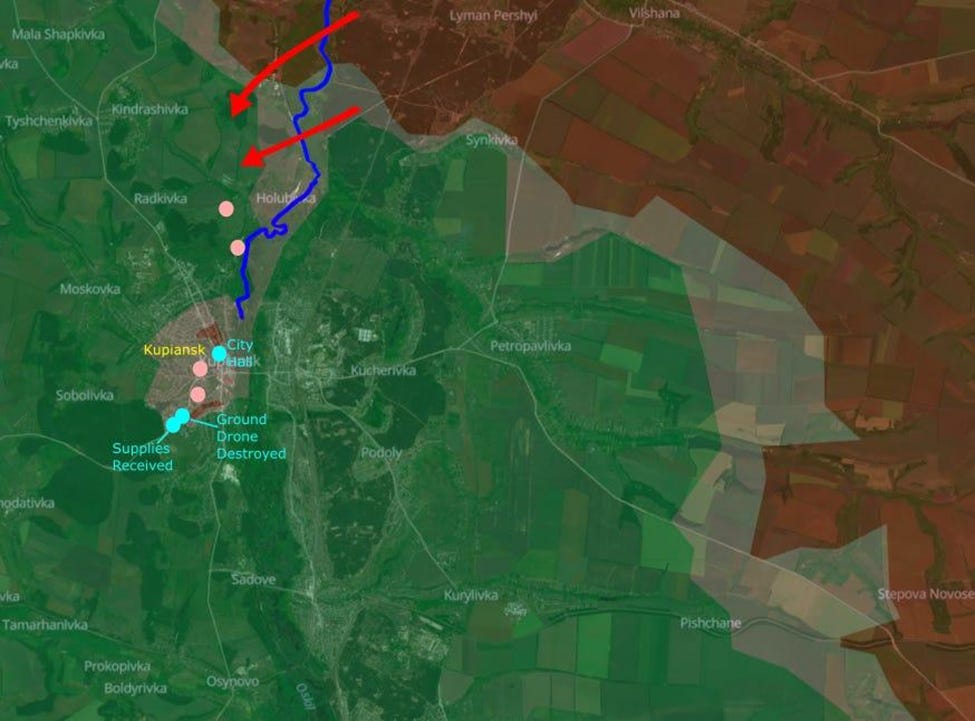
Kupiansk
The Russians remain in control of the centre of the town, regardless how much surrounded for weeks now. Two Russians are captured in a clearing operation. A Russian air defense control station is destroyed. More attacks on Russians in the city. Along with the International Legion, the brigade clears the city hall from the ground up. There were 200 Russians in the city in December and those still alive began the week controlling about 10% of the city in isolated pockets. The front lines did not move, though.
For every Ukrainian killed in this battle, 27 Russians died. This is because Russian troops had to move across a narrow front that was easily monitored by drones and patrols on the ground. The Russians also had to cross a small river and most of those that tried were killed or wounded. It is a poor situation for a Russian attack but the objective was important enough for them to continue reinforcing defeat and they paid the price.
The Khartia Brigade killed 70 soldiers during a Russian attack. More Russians die trying to get into the city.
Supplies are sent to Ukrainian troops by ground drone. Not all the ground drones survive the trips, but lives are saved.
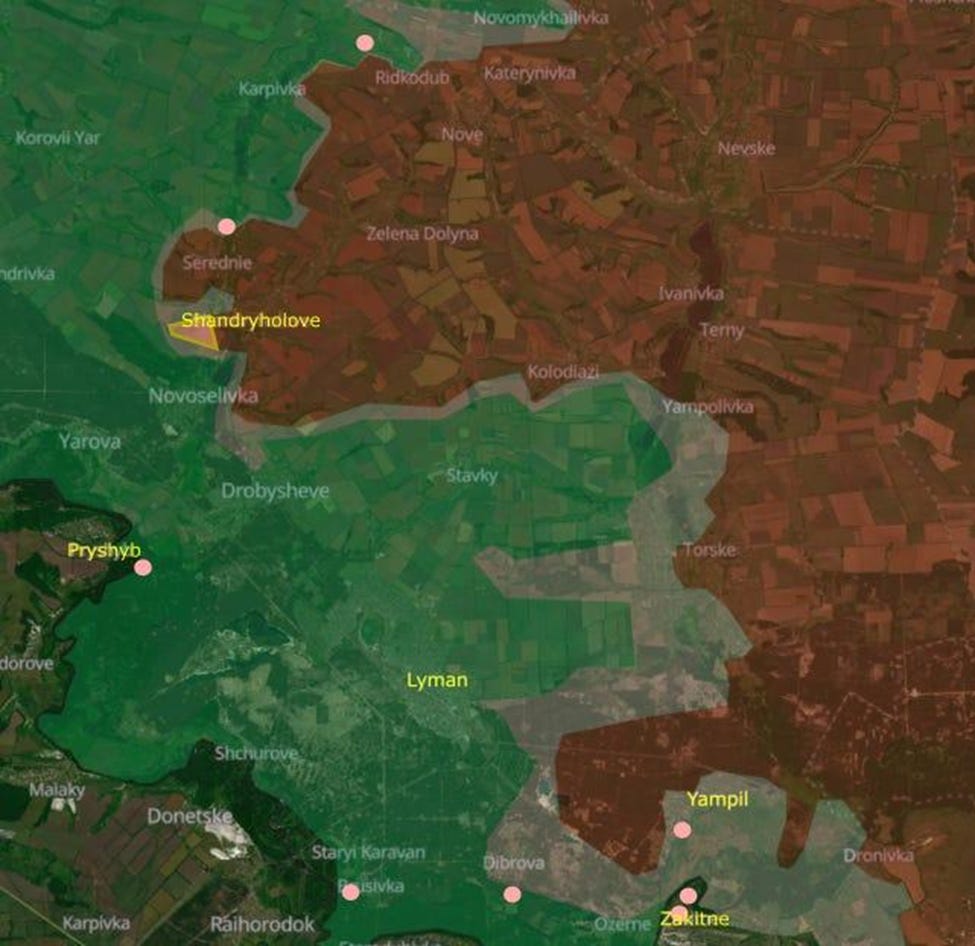
Lyman
While the VKS has spent much of the last week bombing bridges over the Siversky Donets River - i.e. interdicting the (already meagre) flow of supplies and reinforcements for the ZSU in this sector - Russian thermal cloaks are used to defeat Ukrainian drones hunting at night. A Russian is killed 6 km from the ‘front lines’ near Pryshyb. With Russia taking control of Zakitne, they will soon have full control of Yampil.
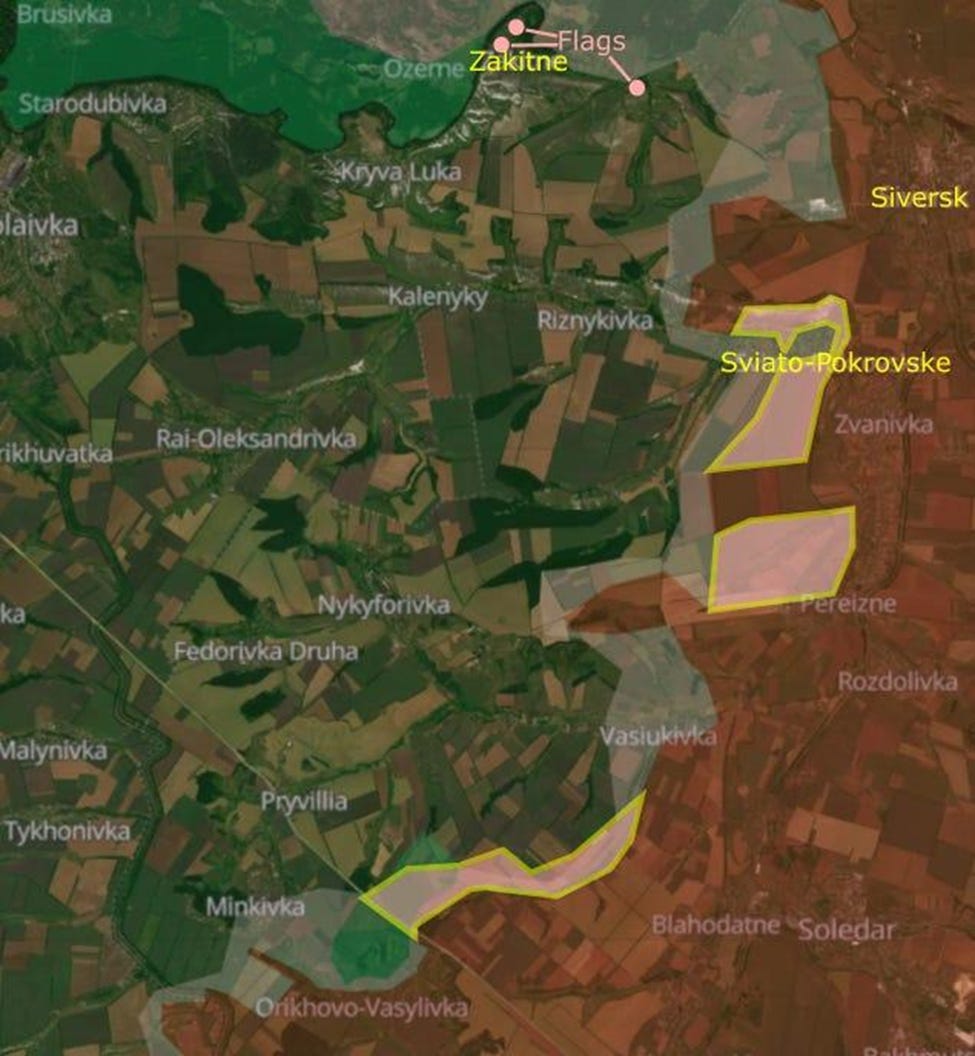
Siversk
A Russian flag is displayed on the eastern end and western end of Zakitne.
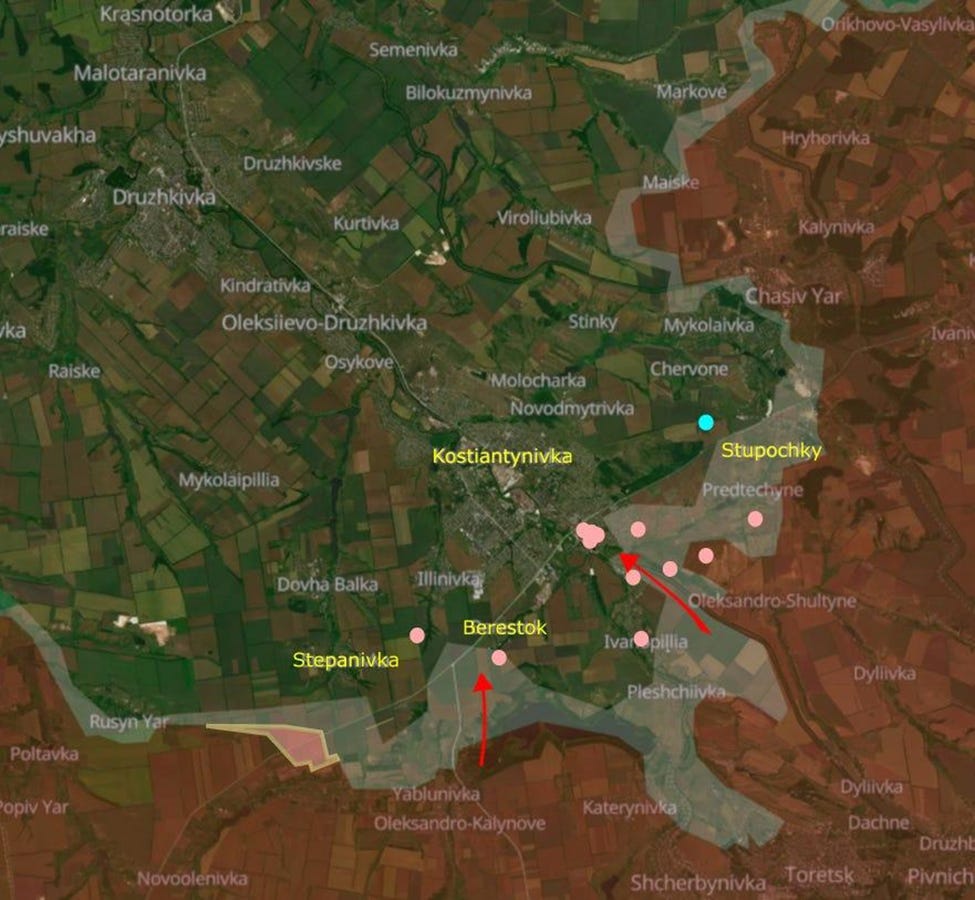
Kostiantynivka
A Russian is eliminated 4 km from the frontline northeast of Stepanivka. A Russian position is attacked south of Berestok.
Ukrainian positions are bombed northwest of Stupochky.
Pokrovsk
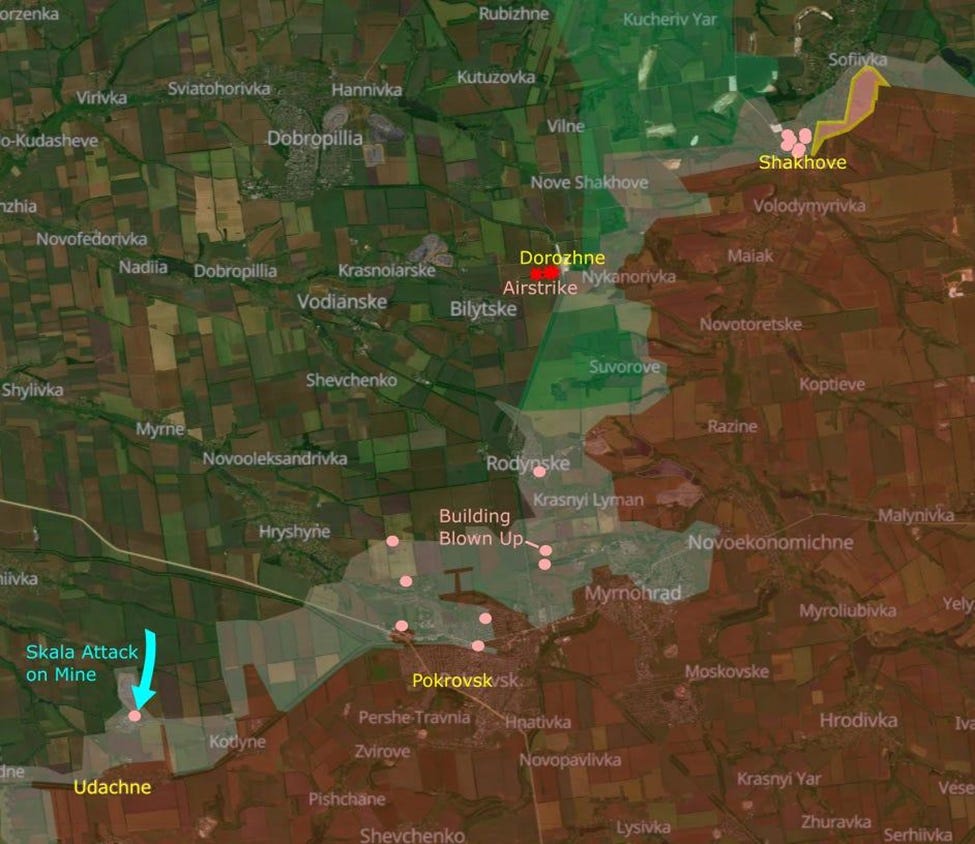
In Dorozhne, on New Year’s eve, a building with a reinforced basement and a mine shaft was a gathering place for Russian forces. Ground drones failed to destroy the position so scouts of the Rubizh carried explosives to the building and inside the basement itself. A delayed fuse was set to give the scout time to withdraw. Since the explosion, there has been no communication between the Russians in that building and their commanders. The scouts were able to make it back to friendly lines.
To the west of Dorozhne, the Russians bomb a treeline.
Russians are attacked in Shakhove.
The 79th Air Assault Brigade kills a Russian and blows up a house so it can’t serve as a collection point for further assaults.
Huliaipole
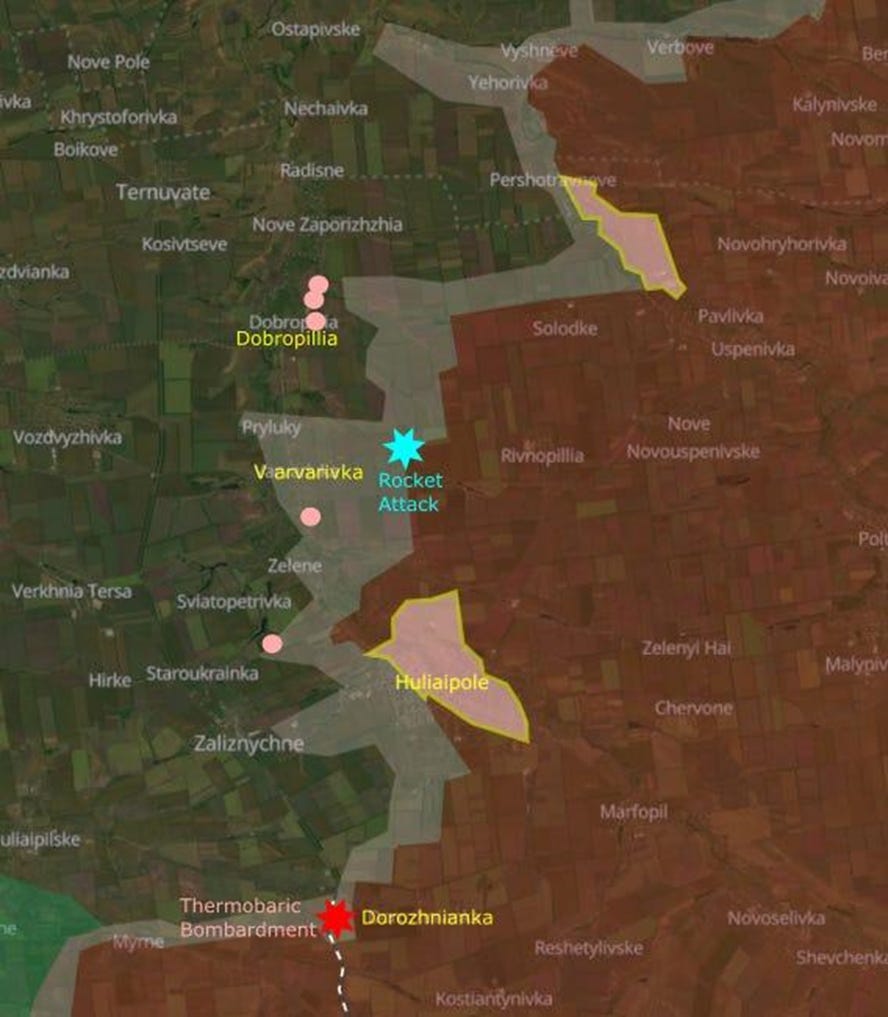
Ukraine blows up a house in Varvarivka, chasing three Russians into the woods where they were killed. Russians around Dobropillia are attacked, and a car is hit by a drone. Ukrainian targets were also attacked in Dobropillia.
Thermobaric rockets bombard Ukrainian positions west of Dorozhnianka. Rockets bombard Russian positions east of Varvarivka.
Zaporizhzhia
Five Russian air defense systems are attacked.
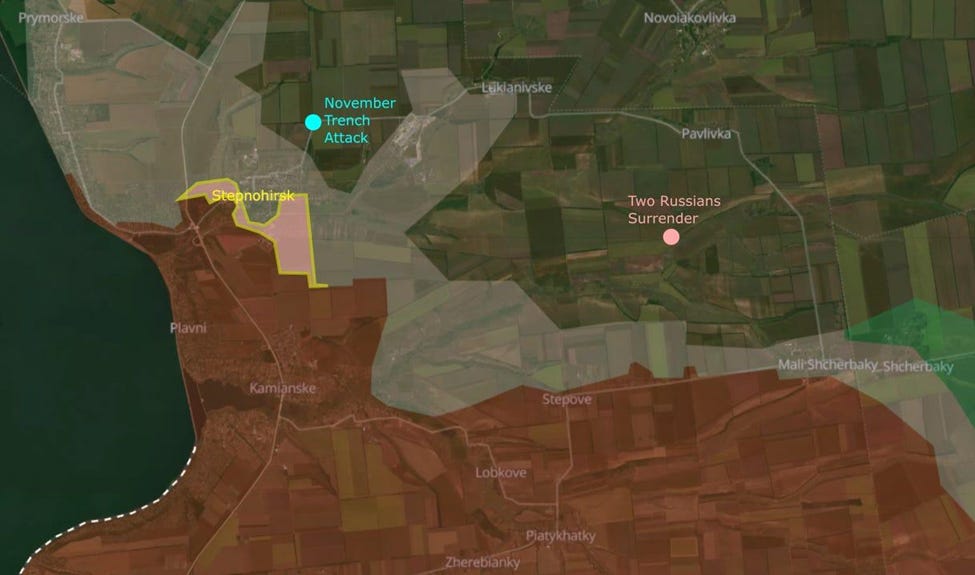
Back in November, the International Legion clears a trench. Two Russians surrender north of Stepove.
Kherson
Shaheds flying along the Dnipro river are intercepted. Two boats in the river are intercepted.
Unknown Location
A Ukrainian interceptor downs a jet-powered Shahed that is carrying an R-60 air-to-air missile.
Lasar’s Group destroys a loaded BM-21.
A Ukrainian soldier compares Russian problems in a winter environment compared to their own:
”Normal frosts have started to hit, the podars are increasingly starting to whine on radio intercepts that there is no food or water, and here the weather has also gone into the negative.
If our infantry positions, in the vast majority, at least somehow provide for the maintenance of life, especially the composition, then the podars just go ahead and forward and it doesn’t matter who you are, what you are, where you are, evacuation, if you are 300, it’s not that they don’t plan, such an understanding in principle does not exist in their heads.”
This text is published with the permission of the author. First published here.


.jpeg)

.jpeg)